
Revenue recognition under the revised FRS 102: What membership organisations need to know
22 Apr 2026 • Charities and Not-For-Profits • Charity and Not-For-Profit Audit

From accounting periods beginning on or after 1 January 2026, organisations applying FRS 102 will be required to adopt a revised approach to revenue recognition.
The revised revenue recognition requirements in FRS 102 are particularly significant for membership organisations, where income streams often involve multiple benefits delivered over time. Organisations will need to apply greater judgement to identify the goods or services being provided and determine when income should be recognised.
This article summarises the key changes, explains the new five‑step revenue recognition model, and explores the practical implications for membership organisations. It also considers how organisations can prepare for implementation and the transition options available.
What is changing?
The revised version of FRS 102 introduces a new, structured model for recognising income from contracts with customers. The changes apply to exchange transactions, where goods or services are provided in return for consideration. They do not apply to non-exchange income such as pure donations or investment income.
Under the previous version of FRS 102, revenue was generally recognised when the organisation was entitled to the income, receipt was probable and the amount could be measured reliably. In practice, many membership organisations recognised subscription income and joining fees on a straight-line basis or, in the case of joining fees, in full, on receipt.
The revised standard replaces this approach with a model that focuses on:
Identifying the promises made to customers
Determining whether those promises are distinct performance obligations
Recognising income as and when those obligations are satisfied.
For some organisations, this change will significantly affect the timing of income recognition, reported surpluses, and opening reserves on transition.
The five-step revenue recognition model
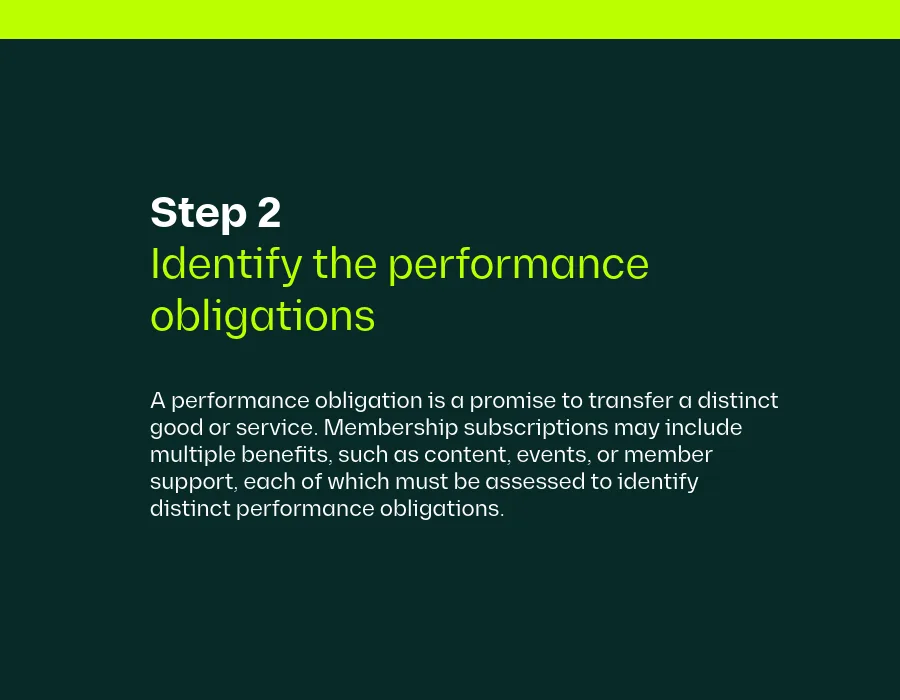
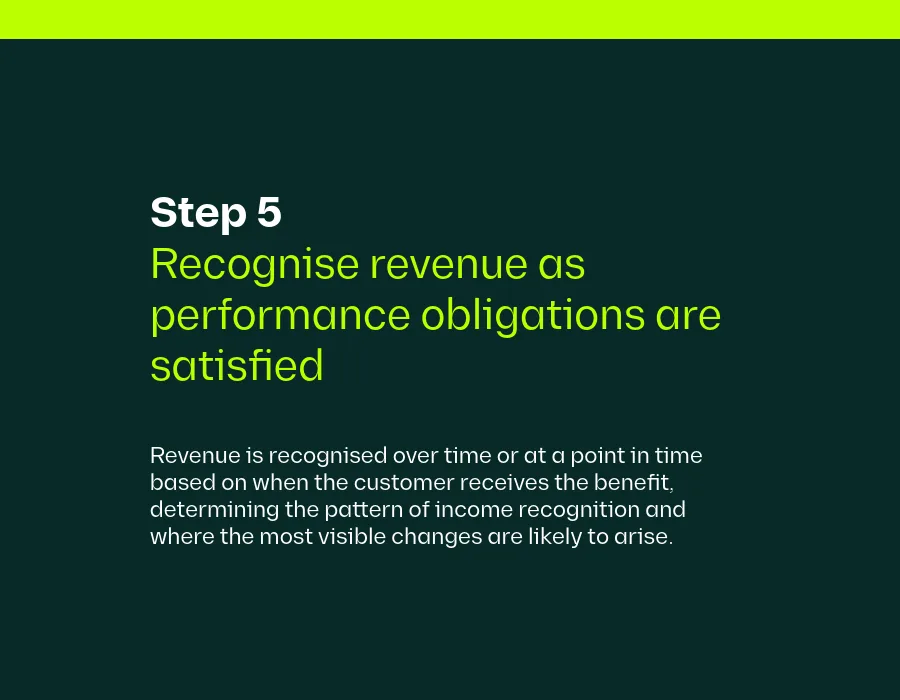
The revised FRS 102 requires organisations to apply a five-step model to all material contracts with customers.



Key challenges for membership organisations
Membership subscriptions can be either exchange or non-exchange transactions, depending on the nature of the benefits provided. Where subscriptions are exchange transactions, the five-step model must be applied.
For many membership organisations, this may change the timing of income recognition, particularly where:
- The membership year does not align with the financial year
- Memberships include a mix of one‑off benefits (such as event access publications) and ongoing services (such as digital content or support)
- Members pay different rates for similar packages of benefits
In these cases, the total subscription fee may need to be allocated across multiple benefits, with income recognised at different points in time. This may result in income being recognised earlier or later than under current practice, leading to differences in reported results between accounting periods, especially in the year of transition.
Joining fees are a particularly significant issue under the revised standard. Although often non-refundable and payable upfront, joining fees do not usually relate to a specific good or service transferred at the point of joining. Instead, they typically give the member the right to access future membership benefits or to renew their membership in the future.
As a result, joining fees should be deferred on receipt and recognised over time, rather than immediately. The recognition period is linked to the period over which the member continues to benefit, which may extend until the member ultimately leaves the organisation.
In practice, organisations will need to:
- Estimate the average membership tenure
- Apply this consistently across joining fees
- Support the assumption with appropriate data
This is a significant change from current practice, where joining fees are often recognised in full, on receipt. On transition, this is likely to result in an additional deferral of income and a reduction in opening reserves.
Education and training programmes often include multiple deliverables, such as course materials, individual modules, examinations, and access to online learning platforms. Under the revised FRS 102, these elements should be treated as separate performance obligations.
The total course fee must therefore be allocated across each element, with income recognised as and when each component is delivered, rather than being spread evenly over the programme term.
For multi‑year programmes, this can significantly change the pattern of income recognition between accounting periods. For example, upfront delivery of course materials or early modules may result in more income being recognised at the start of a programme, with later years reflecting only those elements delivered in that period.
As a result, organisations will need to carefully analyse programme structures, delivery timetables and transition impacts, particularly where education income is material.
Preparing for implementation
Organisations should not underestimate the work involved in implementing the revised revenue recognition model. Key preparatory steps include:
Identifying all material contracts and income streams
Analysing each contract under the five-step model
Documenting key judgments, assumptions and estimates
Gathering data to support estimates such as average membership tenure
Engaging early with auditors to agree approaches
Accounting policies and disclosures will also need to be updated, with additional transitional disclosures required in the first year of adoption.
Transition and adoption approaches
The revised FRS 102 offers two approaches to adoption:
Full retrospective application, where comparative figures are restated as if the new rules had always applied
Modified retrospective application, where comparatives are not restated and a cumulative adjustment is made to opening reserves at the transition date
The full retrospective approach improves comparability but requires more work and data. The modified retrospective approach is simpler but can result in less meaningful trend information in the year of adoption.
The revised revenue recognition requirements under FRS 102 represent a fundamental shift in how membership organisations account for income. While the changes may not affect the total income recognised over time, they can significantly alter when that income is reported.
With the adoption period already underway, now is the time for organisations to start analysing their income streams, gathering evidence and planning their transition. Early preparation will help avoid surprises at year-end and ensure a smoother adoption of the new standard.
Should you have any questions about how the revised standards will impact you specifically, please don’t hesitate to get in touch via the form below, and one of our specialists will be in touch.
Contact us
We're here to help - whether you have a question, need advice, or want to tell us about your requirements.